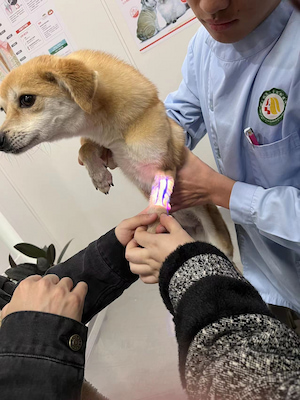
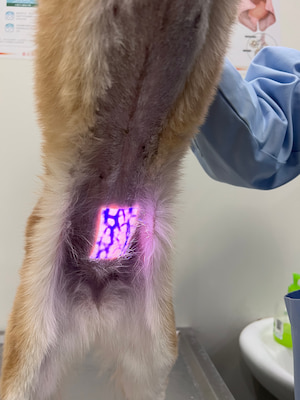
{ vein finder for sale }

  • How can portable venous imaging devices assist in door-to-door blood collection?

    1-Overcome the limitations of light and hardware in the home environment
    Uncontrollable lighting

    : Hospital blood collection rooms usually have bright, shadowless professional lighting, while the light in patients’ homes is often dim, warm-toned, and even small, making it difficult for nurses to clearly see the blood vessels with their naked eyes.


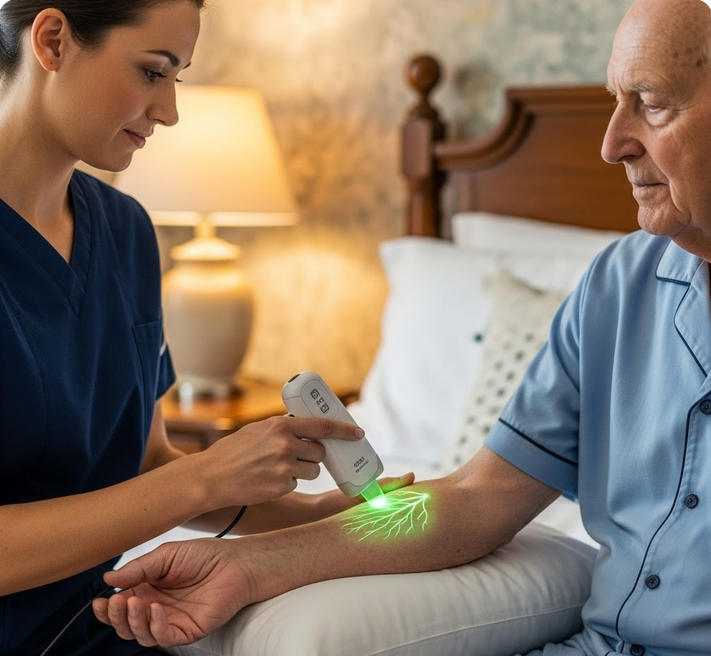
    The assistance of the imaging device: The portable venous imaging device comes with its own light source and can emit near-infrared light of a specific wavelength, completely unaffected by the ambient light in the home. It can provide nurses with a high-contrast “navigation map” of blood vessels in a dim bedroom or beside a bed.


    2.-Overcome the “difficult blood vessels” and increase the rate of incisive response

    Patients who need home blood collection are often vulnerable groups who have difficulty going to the hospital, and their vascular conditions are usually poor.

    Elderly patients: The blood vessel walls are fragile, have poor elasticity, and are prone to sliding or collapsing.

    Children/infants: They have small blood vessels, thick fat layers, and are prone to crying and being uncooperative.

    Patients with chronic diseases or severe conditions: such as those who have been bedridden for a long time, have edema, are obese, or frequently undergo chemotherapy (for arteriosclerosis).


    The assistance of imaging devices: Nurses no longer need to blindly “explore” or repeatedly touch based solely on experience. The imaging device can directly display the direction, thickness, branches and even the position of the valves of veins, helping nurses precisely select the straightest and healthiest blood vessels for puncture, significantly increasing the success rate of “puncturing with a single needle”.


    3-Alleviate the anxiety of patients and their families and build trust between doctors and patients

    Psychological stress: When invasive procedures are performed in a non-medical environment (at home), patients and their accompanying family members often become even more nervous. Once the first injection fails, the family members’ emotions can easily get agitated, leading to complaints.


    The assistance of imaging devices: When patients and their families witness high-tech equipment clearly projecting originally invisible blood vessels onto the skin, it will greatly enhance their trust in the professionalism of nurses. The "visualized" process makes family members feel at ease and effectively reduces the cost of doctor-patient communication and the potential risk of friction.


    Vein Finder supplier


    4-Enhance the confidence and efficiency of nurses working alone
    Isolated and helpless

    : When encountering puncture difficulties in the hospital, nurses can call for assistance from senior colleagues at any time. However, home blood collection is usually done by a single person, and the psychological pressure is huge when encountering difficult blood vessels.

    The assistance of the imaging instrument: The device is compact in size (usually about the size of a flashlight), can be handheld or used with a portable stand, which greatly enhances the operational confidence of the nurses on duty. Quickly locating blood vessels not only reduces the psychological burden on nurses but also shortens the service time for a single blood collection, thereby enhancing the overall outpatient efficiency of nurses within a day.


    Interested in becoming a distributor? Contact us for wholesale pricing.

    Also welcome to contact us, we are ZD Medical Inc.
    Tel : +86-187 9586 9515
    Email : sales@zd-med.com
    Whatsapp/Mobile : +86-187 9586 9515


  • Opportunities in Emerging Markets What are the application potentials of vein finder in primary healthcare in developing countries?

    1. Bridging the "technical gap" of grassroots nurses

    In remote areas of developing countries, there is often a severe shortage of experienced intravenous therapy nurses, and the turnover rate of primary medical staff is high. Many newly graduated or insufficiently trained novices have an extremely high failure rate in puncture when dealing with difficult blood vessels. The imaging device can directly "draw" the vascular routes on the skin, which is a typical "foolproof auxiliary tool", greatly lowering the technical threshold of puncture. This is an excellent selling point that can directly reduce medical disputes for local private clinic owners or distributors in lower-tier markets.


    2. Addressing the challenges of tropical diseases and deep skin tone

    Dark skin puncture: In some parts of Africa or South Asia, dark skin can increase the difficulty of visually locating superficial veins. Near-infrared technology, based on the principle that blood absorbs light, has extremely low sensitivity to skin color and can clearly display the venous network of patients with dark skin tones.

    Emergency treatment for tropical infectious diseases: Dengue fever, cholera, malaria and other diseases frequently occur in these areas. Patients often suffer from severe dehydration, shock or fever, which can cause blood vessels to shrivel and collapse. The imaging device can help village doctors quickly locate venous channels for fluid replacement in such highly challenging emergency situations.


    Vein Finder


    3. Perfectly fit the "mobile medical tour" and power shortage environment

    Primary healthcare in emerging markets relies heavily on mobile medical vehicles, rural medical teams or temporary medical camps set up by international non-governmental organizations . The portable venous imaging device is compact and comes with a large-capacity rechargeable battery, completely independent of a stable power grid. In remote villages with unstable power supply, this ready-to-use device can be regarded as a practical wonder.


    4. Reduce the waste of consumables and the risk of needle prick infection

    The budgets of primary clinics in developing countries are usually very tight. Repeated blind punctures not only waste precious consumables such as indwelling needles and blood collection needles, but more fatal is that in areas with a high incidence of blood-borne infectious diseases such as AIDS and hepatitis B, blind punctures greatly increase the probability of medical staff suffering from needle-puncture injuries. Improving the rate of "hitting the nail on the head" is directly helping local hospitals save money and lives.


    Interested in becoming a distributor? Contact us for wholesale pricing.

    Also welcome to contact us, we are ZD Medical Inc.
    Tel : +86-187 9586 9515
    Email : sales@zd-med.com
    Whatsapp/Mobile : +86-187 9586 9515

  • What are the differences among some different vein finder?

    The following differences also need to be considered when making a choice:
    1. Display mode


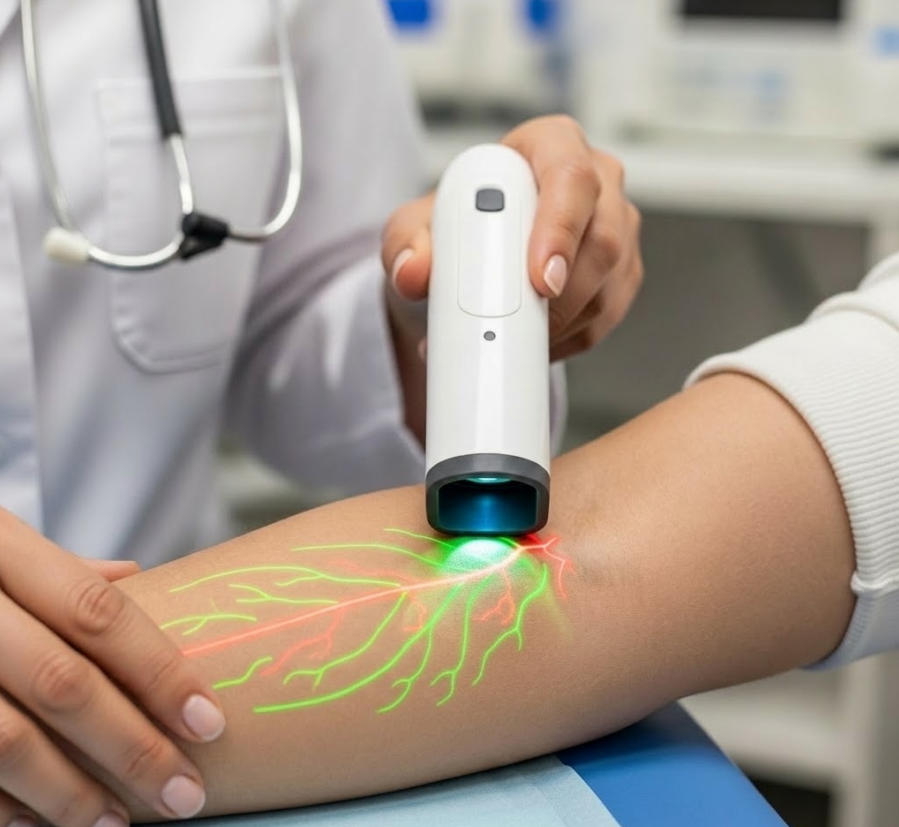
    Direct vision/projection: Project the vascular image directly onto the patient’s skin. The advantage is that the operator does not need to shift their gaze and their hands and eyes are in perfect coordination. The drawback is that the projection may deform due to the curved surface of the skin.

    Screen display type: View vascular images on an independent display screen. The advantage is that the image is clear and stable, and can be viewed by multiple people. The drawback is that the operator needs to switch the line of sight between the patient’s skin and the screen.


    2. Portability and form

    Handheld portable: The most common, it looks like a large flashlight or probe, is flexible and convenient, and can be used beside the bed.

    Desktop/floor-standing: Usually more powerful in function, not easy to move, and often used in fixed departments.

    Head-mounted/wearable: Free up hands, but still in the development stage and not widely used.


    3. Functional differences

    Simple positioning vs. navigation guidance

    Positioning type: Only displays the location and direction of blood vessels. Most infrared devices fall into this category.

    Navigation-guided type: It can not only display blood vessels but also provide real-time guidance on the insertion path and depth of the puncture needle through technologies such as laser indication and puncture needle tracking. Most high-end ultrasonic devices are equipped with this function.

    Vascular recognition algorithm: Smart devices can automatically identify and outline the center line of blood vessels through algorithms, and even assess the suitability of blood vessels, rather than merely displaying an image.


    4. Cost and Maintenance

    Near-infrared equipment: The purchase cost is relatively low, almost no consumables are required, and maintenance is simple.

    Ultrasonic equipment: The purchase cost is high, it requires consumables such as coupling agents, and the maintenance and professional training costs are also high.


    How to choose?

    For routine clinical needs (such as outpatient infusion rooms) : High-quality near-infrared light vein finder are the most cost-effective choice and can solve the puncture problems of most patients.


    For patients with difficult puncture (such as ICU patients, the elderly, those undergoing chemotherapy for tumors, and obese patients) : Portable ultrasound vein finder are more effective tools because they can “see” deep blood vessels and have a higher success rate.


    For the establishment of medium to long-term vascular access: Ultrasound equipment is the gold standard, and even an essential tool, as it can assess vascular conditions, prevent accidental arterial puncture, and guide catheter placement in real time.


    For institutions with limited budgets but still hoping to enhance the efficiency of punctures: They can start with mid-to-high-end near-infrared projection equipment, which can intuitively help nurses quickly locate.


    Interested in becoming a distributor? Contact us for wholesale pricing.

    Also welcome to contact us, we are ZD Medical Inc.
    Tel : +86-187 9586 9515
    Email : sales@zd-med.com
    Whatsapp/Mobile : +86-187 9586 9515


  • What is the success rate of the vein finder?

    The success rate of a vein detector depends on several factors, including the particular equipment used, the skill and experience of the user, and the individual characteristics of the patient. Vein detectors are designed to help healthcare professionals locate veins for a variety of medical procedures, such as blood draws or intravenous (IV) insertions.

    projection vein finder

    While vein detectors can improve the success rate of vein visualization, it is important to note that they are not 100% accurate or foolproof. Success rates can vary from approximately 80% to 95% in different clinical settings and patient populations. Factors such as the patient’s age, skin color, hydration status, and vein condition can also affect success rates.


    Healthcare professionals must use their clinical judgment and combine the information provided by the vein detector with their own assessment and expertise to ensure accurate vein identification and a successful procedure.

    Also welcome to contact us, we are Zhiding Medical Technology Co., Ltd.


    Tel : +86-137 3544 0201
    Email : sales@zd-med.com
    Whatsapp/Mobile : +86-187 9586 9515