1. Bridging the "technical gap" of grassroots nurses
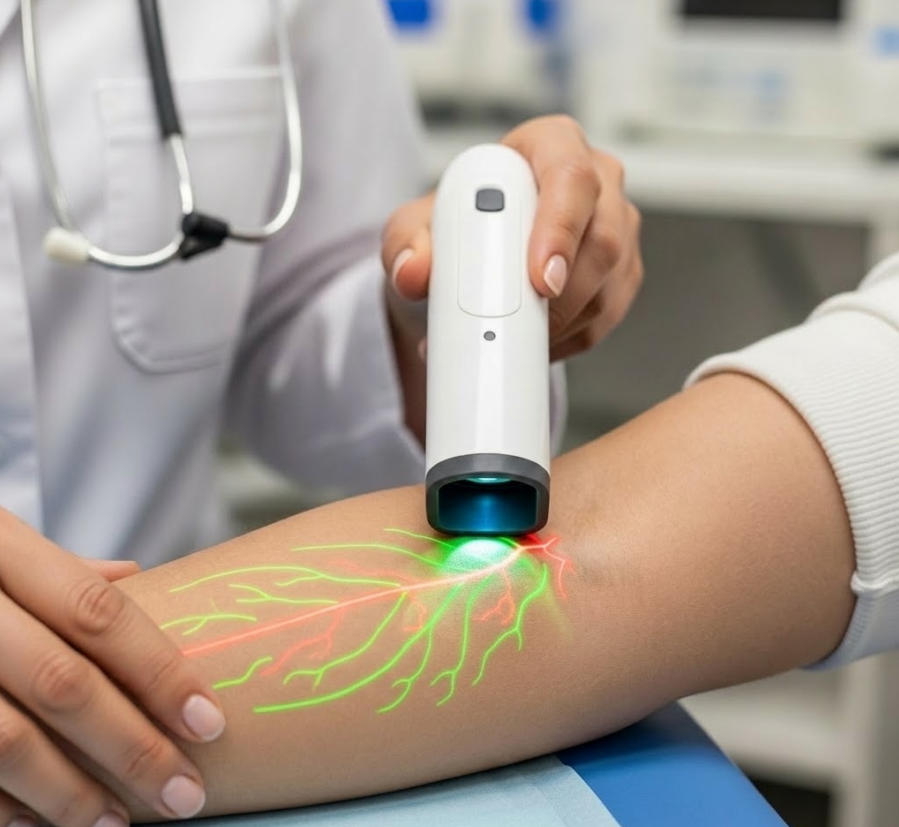
In remote areas of developing countries, there is often a severe shortage of experienced intravenous therapy nurses, and the turnover rate of primary medical staff is high. Many newly graduated or insufficiently trained novices have an extremely high failure rate in puncture when dealing with difficult blood vessels. The imaging device can directly "draw" the vascular routes on the skin, which is a typical "foolproof auxiliary tool", greatly lowering the technical threshold of puncture. This is an excellent selling point that can directly reduce medical disputes for local private clinic owners or distributors in lower-tier markets.
2. Addressing the challenges of tropical diseases and deep skin tone
Dark skin puncture: In some parts of Africa or South Asia, dark skin can increase the difficulty of visually locating superficial veins. Near-infrared technology, based on the principle that blood absorbs light, has extremely low sensitivity to skin color and can clearly display the venous network of patients with dark skin tones.
Emergency treatment for tropical infectious diseases: Dengue fever, cholera, malaria and other diseases frequently occur in these areas. Patients often suffer from severe dehydration, shock or fever, which can cause blood vessels to shrivel and collapse. The imaging device can help village doctors quickly locate venous channels for fluid replacement in such highly challenging emergency situations.
3. Perfectly fit the "mobile medical tour" and power shortage environment
Primary healthcare in emerging markets relies heavily on mobile medical vehicles, rural medical teams or temporary medical camps set up by international non-governmental organizations . The portable venous imaging device is compact and comes with a large-capacity rechargeable battery, completely independent of a stable power grid. In remote villages with unstable power supply, this ready-to-use device can be regarded as a practical wonder.
4. Reduce the waste of consumables and the risk of needle prick infection
The budgets of primary clinics in developing countries are usually very tight. Repeated blind punctures not only waste precious consumables such as indwelling needles and blood collection needles, but more fatal is that in areas with a high incidence of blood-borne infectious diseases such as AIDS and hepatitis B, blind punctures greatly increase the probability of medical staff suffering from needle-puncture injuries. Improving the rate of "hitting the nail on the head" is directly helping local hospitals save money and lives.
Interested in becoming a distributor? Contact us for wholesale pricing.
Also welcome to contact us, we are ZD Medical Inc.
Tel : +86-187 9586 9515
Email : sales@zd-med.com
Whatsapp/Mobile : +86-187 9586 9515