How to Choose the Right Vein Finder for Different Clinical Settings?
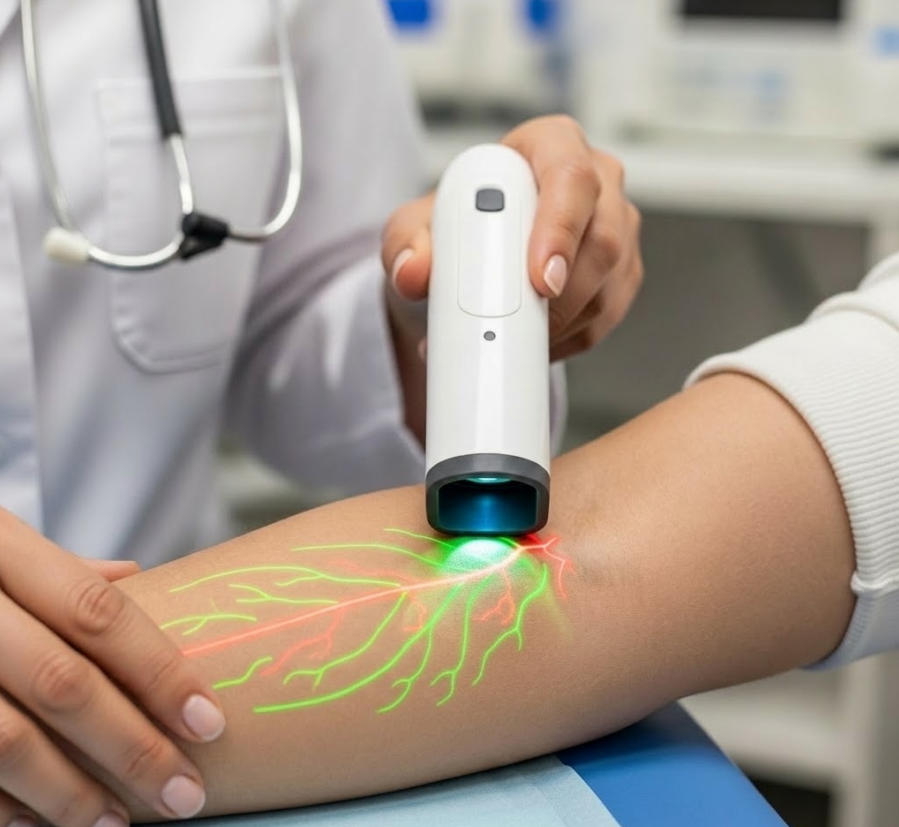
A vein finder can provide healthcare professionals with a real-time visual reference of superficial veins, helping them identify suitable puncture locations more efficiently.
However, not every clinical environment has the same requirements.
A portable handheld vein finder may be ideal for emergency teams, while a table-stand or mobile trolley configuration may be more suitable for hospitals and infusion centers.
So, how should healthcare providers choose the right infrared vein finder?
1. Start With the Clinical Application
The first step is to consider where the vein finder will actually be used.
Different clinical environments may have different requirements for mobility, working distance, image display, and equipment configuration.
Common applications include:
-Hospitals
-Outpatient clinics
-Emergency departments
-Pediatric departments
-Infusion centers
-Blood collection rooms
-Nursing facilities
-Mobile healthcare services
For example, a device used in an emergency department may need to be moved quickly between patients, while equipment used in a treatment room can benefit from a stable stand configuration.
2. Handheld Vein Finders for Flexible Clinical Workflows
A handheld vein finder is designed for mobility and flexibility.
Because the device can be carried directly to the patient, it can be particularly useful when healthcare professionals need to perform venipuncture in different locations.
Typical scenarios may include:
-Emergency care
-Bedside procedures
-Outpatient services
-Pediatric care
-Mobile medical services
-Blood collection
ZD Medical offers portable infrared vein finder solutions designed to visualize superficial veins and provide a vascular image directly on or above the skin.
For facilities where equipment needs to move frequently, portability can be an important consideration.
3. Table-Stand Vein Finders for Stable Operation
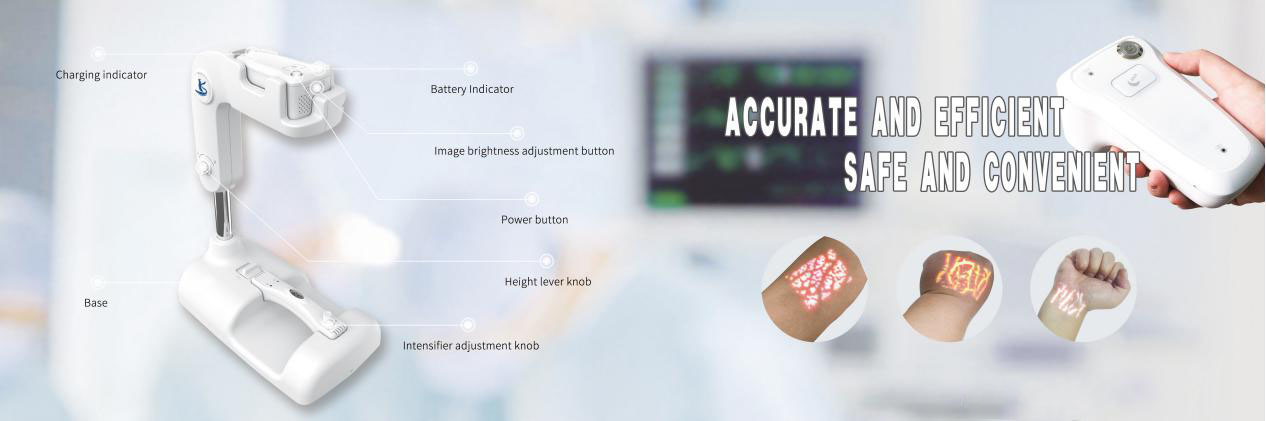
A vein finder with a table stand provides a different workflow.
Instead of holding the device continuously, healthcare professionals can position the equipment at an appropriate working angle and distance.
This type of configuration can be useful in:
-Injection rooms
-Blood collection stations
-Infusion centers
-Outpatient treatment rooms
-Clinical examination areas
ZD Medical's product range includes both flexible table-stand configurations and enhanced table-stand vein finder solutions.
For a fixed clinical environment, stability and convenient positioning can be more important than maximum portability.
4. Mobile Trolley Vein Finders for Hospitals
For larger healthcare facilities, a mobile trolley vein finder can offer another practical option.
The trolley configuration allows the vein visualization system to be moved between different treatment areas while maintaining a stable equipment setup.
This can be especially useful when one device needs to serve multiple patients or departments.
ZD Medical provides mobile trolley stand configurations as part of its Vein Finder product range.
When selecting a trolley-mounted system, hospitals should consider:
-Mobility
-Trolley stability
-Working height
-Equipment positioning
-Storage
-Ease of cleaning
-Compatibility with the clinical workflow
5. Image Quality Is More Important Than Appearance
A vein finder is ultimately a clinical visualization tool.
Therefore, buyers should focus on actual imaging performance rather than simply choosing a device based on its appearance or screen size.
Important factors include:
Real-Time Visualization
The vascular image should respond quickly to changes in the patient's position and the operator's movement.
Image Contrast
Clear contrast between the vascular network and surrounding tissue can make the image easier to interpret.
Image Stability
A stable image helps healthcare professionals use the vascular information as a reference during venipuncture.
Projection Accuracy
For projection-type devices, the relationship between the detected vein and the projected vascular image is particularly important.
ZD Medical describes its vein finder systems as using infrared technology to provide a real-time, high-contrast vascular map for superficial vein visualization.
6. Consider Patients With Difficult Venous Access
One of the most important reasons healthcare facilities consider vein visualization technology is Difficult Venous Access (DVA).
Locating superficial veins can be particularly challenging in some patients, including those with:
-Small or less visible veins
-Darker skin
-Excessive subcutaneous tissue
-Pediatric patients
-Elderly patients
-Dehydration or blood loss
ZD Medical specifically positions its Vein Finder systems as an auxiliary solution for patients with difficult venous access.
The purpose is not to replace clinical judgment, but to provide healthcare professionals with an additional visual reference before venipuncture.
ZD Medical provides a range of infrared Vein Finder solutions, including handheld, flexible table-stand, and mobile trolley configurations, designed for different clinical environments and venipuncture needs.
Contact ZD Medical to discuss the right Vein Finder solution for your hospital, clinic, or distribution business.
Also welcome to contact us, we are ZD Medical Inc.
Tel : +86-187 9586 9515
Email : sales@zd-med.com
Whatsapp/Mobile : +86-187 9586 9515