{ C5000 Bench-top CLIA Analyzer }

  • How Compact CLIA Analyzers are Reshaping Diagnostics in Community Health Centers

    1. Why diagnostics are moving closer to primary care


    Community health centers and primary care clinics are often the first contact for patients with acute symptoms, chronic disease follow-up needs, infectious disease concerns or preventive screening needs. In these settings, diagnostic access is not only about testing capacity - it is about shortening the time between patient presentation, clinical interpretation and next-step care.


    Compact CLIA analyzers can help bridge the gap between central laboratory performance and decentralized service needs. By bringing quantitative immunoassay testing closer to the care site, clinics may reduce send-out dependency, support same-visit decisions and improve triage for patients who need referral or follow-up.


    Primary care role

    Acute care, chronic disease management, infectious disease care and preventive services

    Operational need

    Faster results, fewer send-outs and simpler workflows for non-centralized settings

    POCT direction

    Easy-to-use, affordable and locally appropriate diagnostics for community use


    2. Where compact CLIA adds value in community settings


    Common community-care need

    Compact CLIA contribution

    Poclight C5000 relevance

    Same-visit triage for symptomatic patients

    Quantitative biomarkers can help clinicians assess severity and decide whether to treat, observe or refer.

    3-15 min assay duration across many tests; 7 detection channels support flexible multi-item testing.

    Chronic disease follow-up

    On-site results may support routine monitoring without waiting for external laboratory turnaround.

    Menu covers diabetes, thyroid, bone metabolism, anemia and hormone-related testing.

    Infectious / inflammatory assessment

    Inflammation markers can complement symptoms, vitals and clinical examination in outpatient or urgent-care workflows.

    Inflammation menu includes CRP, SAA, IL-6, PCT, KL-6 and HBP.

    Resource-limited or decentralized sites

    Small footprint, simple operation and lower cold-chain dependence can reduce deployment barriers.

    Lyophilized beads support 2-30°C storage, individual packaging and long shelf-life up to 18 months.


    3. Suggested test-menu positioning


    Clinical area

    Example parameters on C5000

    Potential role in community care

    Inflammation / infection

    CRP, SAA, IL-6, PCT, HBP, KL-6

    Adjunctive assessment for fever, respiratory complaints, inflammatory status and referral decisions.

    Cardiac / dyspnea triage

    hs-cTnT, CK-MB, Myo, BNP, NT-proBNP, D-dimer

    Support faster evaluation pathways for chest pain, dyspnea and cardiovascular risk scenarios.

    Chronic disease & wellness

    HbA1c, 25-OH VD, Ferritin, AB12

    Follow-up testing for diabetes, bone metabolism, anemia and nutritional status.

    Endocrine & fertility

    TSH, FT3, FT4, TT3, TT4, beta-hCG, Prog, FSH, LH, AMH, Testosterone

    Routine monitoring and women’s health support in outpatient practice.


    4. Poclight C5000: compact CLIA for decentralized testing


    Platform item

    C5000 information for blog use

    Principle

    CRET-based Homogeneous Chemiluminescence Immunoassay

    Time to first result

    As fast as 3 minutes; assay durations commonly 3-15 minutes

    Detection channels

    7 detection channels

    Sample types

    Whole blood / serum / plasma, depending on assay

    Throughput

    Max. 80 tests/hour

    Dimensions / weight

    325 x 231 x 213 mm; <=8.5 kg according to C5000 brochure

    Reagent format

    Single-dose lyophilized beads; 2-30°C storage; maximum 18-month shelf-life

    Workflow

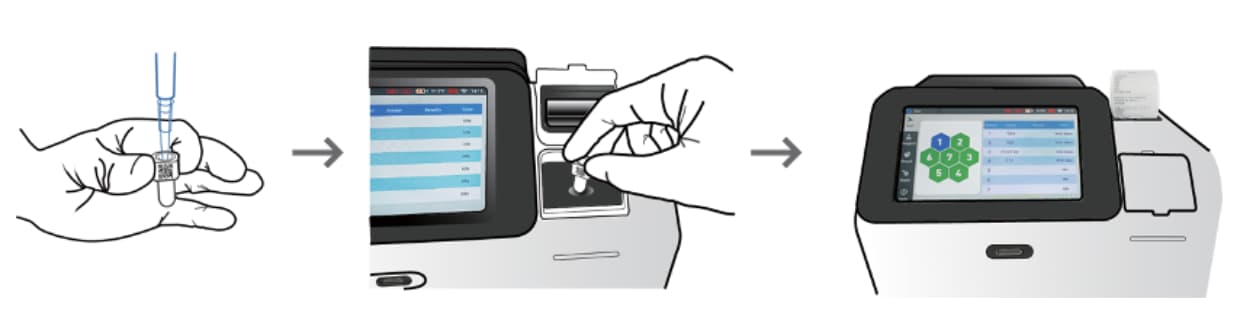
    Add sample - place sample - read result


    5. Blog conclusion / CTA


    Compact CLIA does not replace central laboratories. Instead, it adds a practical diagnostic layer for community health centers: rapid quantitative testing, smaller space requirements, simplified reagent logistics and a menu that supports both urgent and routine care. For clinics aiming to expand in-house testing while maintaining professional laboratory workflows, Poclight C5000 provides a scalable entry point into CLIA-based diagnostics.

     

  • Managing Severe Sepsis in the ICU The Clinical Synergy of PCT and IL-6 Testing


    1. Introduction

    Sepsis is a medical emergency in which rapid assessment and repeated reassessment are essential. No single laboratory marker can confirm or exclude sepsis, but complementary biomarkers can add objective information while clinicians evaluate infection, organ dysfunction, microbiology, imaging and source control.


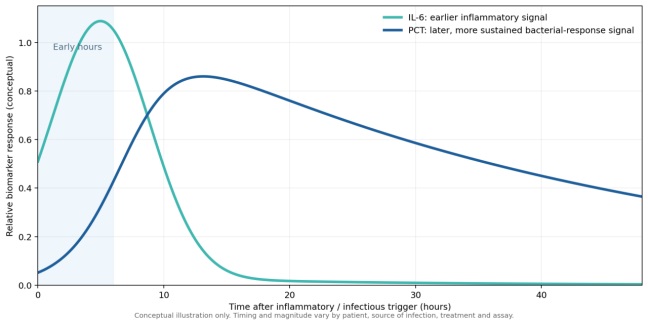
    PCT and IL-6 provide different views of the host response. IL-6 reflects early inflammatory activation, while PCT is more closely associated with systemic bacterial infection and often remains elevated longer. Used together and interpreted as trends, they can support a clearer picture of disease evolution in the ICU.


    2. Why PCT and IL-6 Work Better Together

    The value of combined testing comes from complementary timing and clinical interpretation rather than from a single universal cut-off.


    Marker

    What it adds

    Key limitation

    IL-6

    Early signal of cytokine-driven inflammation; useful for severity context and rapid change over time.Also valuable in COVID-19 severity stratification and cytokine release syndrome (CRS) monitoring.


    Sensitive but not specific for bacterial infection; may rise after surgery, trauma or other inflammatory stress.

    PCT

    Adds context for systemic bacterial infection and is useful for serial monitoring and antimicrobial review.

    May remain low in very early or localized infection and can be influenced by timing, renal dysfunction and major tissue injury.


    PCT and IL-6


    Practical interpretation  Focus on direction of change. A persistent or secondary rise should prompt reassessment for uncontrolled infection, inadequate source control, complications or a non-infectious inflammatory process.


    3. A Practical ICU Testing Framework


    At presentation

    Clinical exam, cultures, lactate, organ-function assessment + baseline PCT and IL-6

    624 hours

    Repeat biomarkers when clinically indicated; focus on direction and rate of change

    Ongoing ICU review

    Integrate trends with source control, microbiology, hemodynamics and response to therapy

    Antibiotic review

    Use PCT only with clinical evaluation; never as the sole reason to start or stop treatment


    4. Poclight C5000 Assay Information


    Assay

    Sample

    Volume

    Time

    Measuring range

    Storage / stability

    PCT

    Serum / Plasma

    200 µL

    5 min

    0.02-100 ng/mL

    2-30°C / 18 months

    IL-6

    Serum / Plasma

    100 µL

    15 min

    1.5-5000 pg/mL

    2-30°C / 18 months


    Our standout features:


    1.  Small Sample Volume & Rapid Results

    Small sample volume of serum or plasma needed, with 5-15 minute turnaround, ideal for fast clinical decisions.

    2.  Freeze-dried reagents: no cold chain, 18 months shelf life, simplifying storage and transport.

    3.  High accuracy and excellent precision (CV < 5%)

    4.  Applicable with the C5000 POC CLIA Analyzer: 3-Step Operation, Maintenance-Free

  • Monitoring Drug-Induced Lung Injury Expanding the Clinical Application of KL-6

    1. Drug-Induced Lung Injury: A Diagnostic Challenge


    Drug-induced lung injury may occur during treatment with anticancer agents, immune checkpoint inhibitors, targeted therapies, disease-modifying antirheumatic drugs, amiodarone and other implicated medicines. Symptoms and imaging patterns can overlap with infection, tumour progression, pulmonary oedema or worsening pre-existing interstitial lung disease (ILD).


    Assessment therefore depends on the complete clinical picture: medication exposure and timing, symptoms, oxygenation, high-resolution computed tomography (HRCT), pulmonary function, microbiology and specialist review. KL-6 can add a non-invasive blood-based perspective on alveolar epithelial injury within this wider assessment.


    Core message  KL-6 is not a drug-specific marker. Its value is greatest when serial results are interpreted together with HRCT, symptoms, pulmonary function and infection-related testing.


    2. What KL-6 Reflects


    KL-6 is a high-molecular-weight MUC1 glycoprotein mainly expressed by type II alveolar epithelial cells. When epithelial injury, regeneration and alveolar-capillary leakage occur, KL-6 may enter the circulation. This makes it a useful supportive marker for ILD-related assessment and follow-up.


    Why KL-6 Can Add Value in Drug-Related Lung Injury Assessment


    1. Drug exposure / treatment

    Targeted therapy, ICI, chemotherapy, antiarrhythmic, DMARD or other implicated drug

    2. Alveolar epithelial injury

    Type II pneumocyte injury, regeneration and increased alveolar-capillary permeability

    3. KL-6 enters circulation

    A blood-based signal reflecting epithelial injury burdennot a drug-specific marker

    4. Integrated clinical interpretation

    Use with symptoms, HRCT, PFT / DLCO, medication timeline and infection work-up


    3. Where KL-6 Adds Clinical Value


    Clinical focus

    Potential value

    How to interpret

    Triggered assessment

    Adds an epithelial-injury signal when new respiratory symptoms or HRCT changes raise concern for treatment-related ILD.


    Integrate with medication timing, oxygenation, HRCT and infection work-up.Elevated KL-6 can assist in the judgment of drug-induced lung injury, especially providing blood-based epithelial injury signals in the differential diagnosis of "abnormal HRCT but unknown etiology"


    Dynamic monitoring

    Serial change may help show improvement, persistence or progression during follow-up.

    Trend direction is generally more informative than one isolated result.

    Differential support

    Can be combined with PCT, CRP and microbiology when infection and drug-related pneumonitis are both possible.

    No biomarker combination replaces imaging, cultures or multidisciplinary review.


    4. A Practical Monitoring Pathway


    Suggested Monitoring Pathway (Adapt to Local Protocols)


    1. Before therapy

    Review prior ILD, thoracic radiation, lung function and drug-specific risk.

    Consider a baseline KL-6 value when clinically appropriate.

    2. During therapy

    Track new cough, dyspnea, fever, oxygen saturation or exercise intolerance.

    3. When lung injury is suspected

    Prompt clinical review, HRCT, infection evaluation, PFT / DLCO when feasible, and KL-6 with complementary markers.

    4. Follow-up

    Use serial clinical, imaging and functional assessment. KL-6 trend may add context to improvement or progression.


    5. KL-6 Testing on the Poclight C5000


    Assay

    Sample

    Sample preparation

    Time

    Measuring range

    Reference cut-off

    Storage

    KL-6

    Serum / Plasma

    50 µL into lysis solution; 50 µL mixture to reagent

    5 min

    50-5000 U/mL

    ≤400 U/mL

    2-30°C / 18 months


    Our standout features:


    1.  Small Sample Volume & Rapid Results

    Small sample volume of serum or plasma needed, with 5-15 minute turnaround, ideal for fast clinical decisions.

    2.  Freeze-dried reagents: no cold chain, 18 months shelf life, simplifying storage and transport.

    3.  High accuracy and excellent precision (CV < 5%)

    4.  Applicable with the C5000 POC CLIA Analyzer: 3-Step Operation, Maintenance-Free

  • Integrating Poclight Bench-top CLIA into Decentralized Women’s Endocrine Care Settings


     Sex hormone testing is often pigeonholed into fertility, but its impact spans a woman’s entire life.


    This International Women’s Day, Poclight celebrates the resilience and intricate biology of women worldwide. We believe that the highest form of care is Precision. We empower every woman with the data she needs to understand her body at every milestone. Our mission is to transform complex clinical questions into clear and immediate answers.


    International Women's Day


    I.  Identifying Unmet Needs in Endocrine Care


    Hormonal imbalances are often underdiagnosed, leading to long-term health risks that extend far beyond reproductive concerns. Addressing these gaps is the first step toward integrated women's wellness.

    ● A Case for Early Detection: Polycystic Ovary Syndrome (PCOS) affects up to 13% of women of reproductive age. According to the World Health Organization (WHO), up to 70% of these cases remain undiagnosed globally, often leading to unmanaged metabolic risks.

    ● The Transition: By 2030, an estimated 1.2 billion women will be navigating the menopausal transition (Source: North American Menopause Society). Without precise monitoring of estrogen decline, risks such as Osteoporosis (which affects 1 in 3 women over the age of 50 according to the International Osteoporosis Foundation) often remain undetected until a fracture occurs.


    II.  The Clinical Roadmap: When to Test


    Regular hormonal profiling is not merely a tool for fertility but a diagnostic necessity to mitigate the long-term risks of metabolic dysfunction, premature aging, and bone density loss.


    By identifying physiological shifts early, healthcare providers can implement evidence-based interventions that safeguard a woman’s health long before symptoms become severe.


    Clinical Monitoring & Risk Mitigation


    Life Stage / Clinical Focus

    Recommended Test Frequency

    Key Biomarkers

    Clinical Objective (Risk Mitigation)

    Adolescence (Pubertal Development)

    Baseline Screening (Annual follow-up)

    FSH, LH, Estradiol (E2)

    To monitor pubertal progression and detect early signs of Precocious Puberty or endocrine metabolic shifts.

    Preventive Wellness (Ages 18–35)

    Every 1 to 2 Years

    AMH, Testosterone, Prolactin (PRL)

    To screen for asymptomatic Polycystic Ovary Syndrome (PCOS) and mitigate risks of long-term metabolic dysfunction.

    Fertility & Family Planning

    Cycle-Specific Tracking

    AMH, Progesterone, LH

    To assess ovarian reserve and confirm ovulation quality, reducing the risk of undiagnosed Infertility.

    Perimenopause (Ages 35–50)

    Every 6 to 12 Months

    FSH, Estradiol (E2), AMH

    To identify Premature Ovarian Insufficiency (POI) and manage the transition to prevent sudden hormonal drops.

    Post-Menopause (Age 50+)

    Annually (Part of geriatric screening)

    FSH, Estradiol (E2)

    To monitor Estrogen deficiency and mitigate the risk of Osteoporosis and cardiovascular complications.


    female health


    III. Our Solution: The Poclight C5000 Micro CLIA System


    To address these clinical needs at the point of care, the Poclight C5000 Micro CLIA (Chemiluminescence Immunoassay) system provides laboratory-grade precision in a compact format.


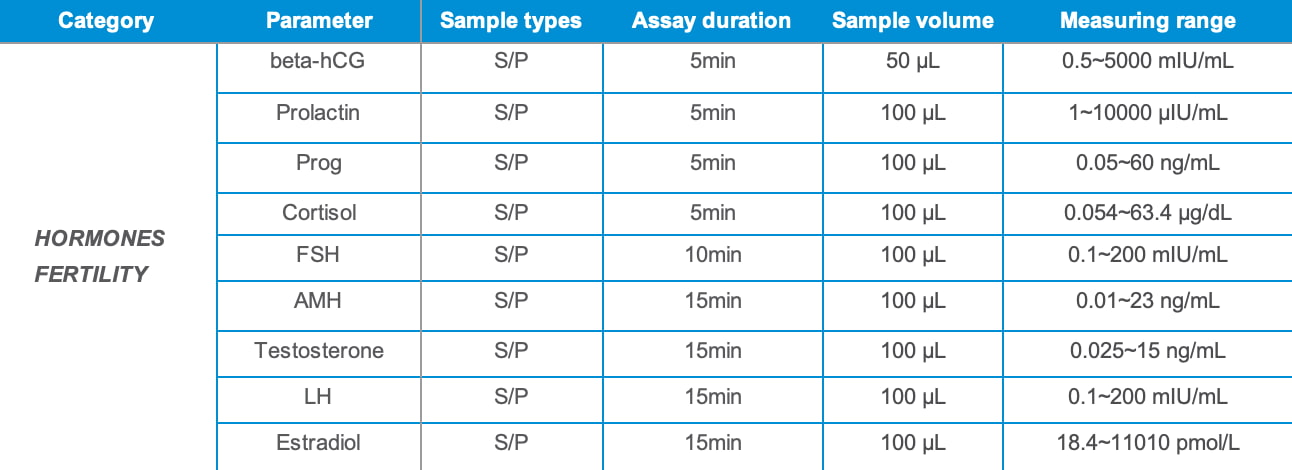
    Available hormone fertility markers at a glance:


    Poclight sex hormones


    Discover more about our solutions:


    Anti-Müllerian Hormone (AMH) Test Kit

    Estradiol (E2) Test Kit


    Our standout features:


    1.  Small Sample Volume & Rapid Results

    Only 50 μL of serum or plasma needed, with 5-minute turnaround, ideal for fast clinical decisions.

    2.  Freeze-dried reagents: no cold chain, 18 months shelf life, simplifying storage and transport.

    3.  High accuracy and excellent precision (CV < 5%)

    4.  Applicable with the C5000 POC CLIA Analyzer: 3-Step Operation, Maintenance-Free


    C5000


    Become a Partner / Request a Quote

    Are you ready to lead the revolution in decentralized immunology? We invite distributors and healthcare professionals to explore our comprehensive diagnostic panels.