{ 4-Nitrophenyl Phosphate }

  • How to Choose the Right ALP Substrate for Your IVD Assay Kit

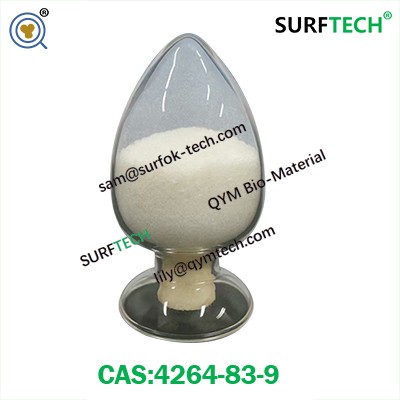
    4-Nitrophenyl Phosphate (p-NPP) Product Main Image

    Choosing the right substrate for alkaline phosphatase (ALP) detection is one of the most critical decisions when developing or optimizing an in vitro diagnostic (IVD) assay kit. The substrate directly determines assay sensitivity, dynamic range, signal stability, and overall kit performance. Among the various ALP substrates available, 4-Nitrophenyl Phosphate (p-NPP) has long been recognized as the gold standard for colorimetric ALP detection in clinical diagnostics and immunoassay development.

    This guide provides a comprehensive overview of the key factors you should consider when selecting an ALP substrate for your IVD assay kit, with a special focus on p-NPP and its advantages.


    Understanding the Role of ALP Substrates in IVD Assays

    Alkaline phosphatase is one of the most widely used enzyme labels in immunoassays, including ELISA, chemiluminescence immunoassays, and enzyme-linked immunospot (ELISpot) assays. ALP catalyzes the dephosphorylation of substrate molecules, producing a detectable signal — either colorimetric, fluorescent, or chemiluminescent. The choice of ALP substrate directly impacts the signal-to-noise ratio, limit of detection, and reproducibility of the assay.

    For colorimetric detection, 4-Nitrophenyl Phosphate (p-NPP) (CAS: 4264-83-9) is the substrate of choice. When hydrolyzed by ALP, p-NPP produces a yellow-colored product (4-nitrophenol) that can be measured at 405 nm using a standard microplate reader. This simple, reliable reaction mechanism makes p-NPP ideal for clinical diagnostic reagents used in hospital laboratories worldwide.


    Key Factors to Consider When Choosing an ALP Substrate

    When selecting an ALP substrate for your IVD assay kit, the following factors should be carefully evaluated:


    1. Sensitivity and Detection Range

    The sensitivity of the substrate determines the lowest concentration of ALP that can be reliably detected. High-Quality 4-Nitrophenyl Phosphate with 4-Nitrophenol content ≤0.07% and reaction rates (AP) of 95%–105% offers superior sensitivity with minimal background interference. For ALP-based ELISA applications, p-NPP provides a detection range spanning several orders of magnitude.


    2. Purity and Batch-to-Batch Consistency

    Table 1: Quality Specifications of IVD-Grade p-NPP (CAS 4264-83-9)

    Parameter Specification
    Appearance White to yellowish crystalline powder
    pH Value 8–10
    Water (K. Fischer) 25%–31%
    4-Nitrophenol ≤0.07%
    Na Content 11.4%–13.4%
    Pi (Free Phosphate) ≤0.3%
    Reaction Rate (AP) 95%–105%
    Molecular Formula C₆H₄NO₆PNa₂·6H₂O
    Molecular Weight 371.1
    Packaging 100g, 500g, 1kg, 5kg, 10kg
    Shelf Life 24 months at 2–8°C

    For IVD kit manufacturers, batch-to-batch consistency is paramount. Inconsistent substrate quality leads to assay variability, failed lot releases, and increased production costs. High-Quality 4-Nitrophenyl Phosphate (CAS 4264-83-9) with tight quality control ensures that every kit lot performs identically, reducing re-validation burden and regulatory risk.


    3. Solubility and Buffer Compatibility

    A good ALP substrate must be fully soluble in common assay buffers, including diethanolamine (DEA) buffer and Tris buffer. p-NPP exhibits excellent solubility in aqueous solutions, with rapid dissolution even at high working concentrations. This compatibility simplifies kit formulation and ensures consistent reaction kinetics across different buffer systems used in alkaline phosphatase detection protocols.


    4. Stability During Storage and Shipment

    IVD kits often face challenging storage and shipping conditions, including temperature fluctuations during transit. High-quality p-NPP substrates demonstrate exceptional stability, with a guaranteed shelf life of 24 months when stored at 2–8°C and protected from light. This stability translates into longer kit shelf life and reduced cold-chain logistics costs for manufacturers.


    5. Cost-Effectiveness for Large-Scale Manufacturing

    For commercial IVD kit production, substrate cost per test is a critical factor. p-NPP offers an excellent balance of performance and affordability. As one of the most widely produced chromogenic substrates globally, p-NPP is available in bulk quantities at competitive pricing, making it ideal for high-volume IVD assay kit manufacturing.


    Conclusion
    4-Nitrophenyl Phosphate (p-NPP) Supplier

    Selecting the right ALP substrate is a strategic decision that affects every aspect of IVD kit performance — from sensitivity and reproducibility to manufacturing cost and regulatory approval. For colorimetric ALP detection in clinical diagnostic applications, 4-Nitrophenyl Phosphate (p-NPP, CAS 4264-83-9) offers the best combination of sensitivity, stability, consistency, and cost-effectiveness. By choosing a high-purity, IVD-grade p-NPP substrate from a trusted manufacturer, you can ensure that your assay kit delivers reliable, reproducible results that clinicians can trust.

  • The Chemistry Behind p-NPP From 4-Nitrophenyl Phosphate to Yellow Colorimetric Signal

    4-Nitrophenyl Phosphate (p-NPP) Product

    Introduction: Why Understanding the Chemistry Matters

    For IVD reagent manufacturers and clinical laboratory professionals, understanding the fundamental chemistry behind the p-NPP (4-Nitrophenyl Phosphate) colorimetric reaction is essential for optimizing assay performance, troubleshooting unexpected results, and developing robust diagnostic kits. While many users take the simple "add substrate → measure yellow color" workflow for granted, the underlying enzymatic and chemical processes are remarkably elegant.

    This article explores the complete chemical journey of p-NPP (CAS: 4264-83-9), from its molecular structure to the final spectrophotometric readout, explaining why this IVD substrate for alkaline phosphatase has remained the gold standard for decades.


    The Molecular Structure of p-NPP

    4-Nitrophenyl Phosphate (p-NPP) has the molecular formula C₆H₄NO₆PNa₂·6H₂O with a molecular weight of 371.1. Its structure consists of a benzene ring with two key functional groups:

    • A nitro group (-NO₂) at the para position — this is the chromophore responsible for light absorption at 405 nm
    • A phosphate ester group (-OPO₃²⁻) — this is the substrate site cleaved by alkaline phosphatase (ALP)

    The para-nitro substitution is critical: it creates an electron-withdrawing effect that stabilizes the phenolate anion (the colored product) after enzymatic dephosphorylation. This electronic configuration is what makes p-NPP an excellent chromogenic substrate — the product absorbs strongly in the visible spectrum, whereas the intact substrate does not.

    As a disodium salt hexahydrate, p-NPP appears as a white to yellowish crystalline powder with a pH of 8–10 in solution. The water content (K. Fischer: 25%–31%) is carefully controlled in High-Quality 4-Nitrophenyl Phosphate (CAS 4264-83-9) to ensure consistent hydration state and reaction kinetics.


    The Enzymatic Reaction: Dephosphorylation by Alkaline Phosphatase

    The core reaction is a straightforward enzymatic dephosphorylation:

    p-NPP (colorless) + H₂O → 4-Nitrophenol (yellow) + Inorganic Phosphate (Pi)

    Alkaline phosphatase (ALP) catalyzes this hydrolysis reaction optimally at an alkaline pH (typically pH 9–10.5), using zinc and magnesium ions as essential cofactors. The enzyme's active site coordinates the phosphate ester, facilitating nucleophilic attack by a water molecule. The transition state is stabilized by the enzyme's serine residue, which forms a transient phosphoserine intermediate before releasing the inorganic phosphate.

    The 4-nitrophenol product exists in equilibrium between its protonated (colorless, λmax ≈ 320 nm) and deprotonated (yellow, λmax = 405 nm) forms. At alkaline pH, the equilibrium shifts strongly toward the phenolate anion, producing the characteristic yellow color measured in clinical chemistry analyzers.


    Kinetic Parameters and Assay Optimization

    For optimal assay performance, understanding the Michaelis-Menten kinetics of the ALP-p-NPP system is crucial:

    • Km (Michaelis constant): Approximately 1–3 mM for p-NPP with human ALP, depending on buffer composition and pH
    • Vmax: Highly dependent on enzyme concentration and buffer conditions; diethanolamine (DEA) buffer typically yields 2–3× higher activity than Tris or AMP buffers
    • Optimal substrate concentration: Typically 10–16 mM in final reaction mixture (well above Km for zero-order kinetics)

    p-NPP Product Specifications

    The reaction rate is monitored by the increase in absorbance at 405 nm over time. For a 1 cm path length, the molar extinction coefficient (ε) of 4-nitrophenol at 405 nm is approximately 18,500 M⁻¹·cm⁻¹ under alkaline conditions. This high extinction coefficient translates directly into excellent assay sensitivity — a key reason why p-NPP substrate remains the preferred choice for alkaline phosphatase detection in clinical settings.

    Table 1: Key Kinetic Parameters of p-NPP with Human ALP

    Parameter Value Optimal Condition
    Km 1.5–3.0 mM DEA buffer, pH 9.8
    Vmax Enzyme-dependent 37°C, saturating substrate
    Optimal pH 9.5–10.5 DEA or AMP buffer
    Extinction Coefficient (ε, 405 nm) ~18,500 M⁻¹·cm⁻¹ pH > 9.0
    Reaction Rate (AP) Spec 95%–105% Per IVD-grade specification
    Substrate Concentration 10–16 mM For zero-order kinetics


    Chemical Purity Considerations: Why Impurity Control Matters

    The analytical performance of p-NPP-based assays is directly impacted by substrate purity. Two critical impurities must be tightly controlled:

    1. Free 4-Nitrophenol (≤ 0.07%): Pre-existing 4-nitrophenol in the substrate increases the initial absorbance background, reducing the usable dynamic range and potentially causing false elevation of low-activity samples.
    2. Free Phosphate (Pi, ≤ 0.3%): Inorganic phosphate acts as a competitive inhibitor of ALP, competing with p-NPP for the enzyme active site. High Pi content can reduce reaction rates and introduce systematic bias in activity measurements.

    High-Quality 4-Nitrophenyl Phosphate (CAS 4264-83-9) from QYM controls 4-Nitrophenol to ≤ 0.07% and free phosphate to ≤ 0.3%, ensuring low background and consistent reaction kinetics across all batches. The Na content (11.4%–13.4%) is also tightly specified, as sodium ions influence the ionic strength of the reaction buffer.


    Spectrophotometric Measurement: From Yellow Color to Quantitative Results

    The measurement principle is based on the Beer-Lambert Law: A = ε · c · l, where A is absorbance, ε is the molar extinction coefficient, c is the concentration of 4-nitrophenol, and l is the path length. The clinical chemistry analyzer makes timed absorbance readings at 405 nm, typically using a bichromatic measurement with a secondary wavelength of 450–480 nm to correct for sample turbidity.

    The ALP activity (in U/L) is calculated from the rate of absorbance change (ΔA/min), using a calibration factor derived from the extinction coefficient and reaction conditions. This direct, linear relationship between absorbance and enzyme activity is what gives p-NPP-based clinical diagnostic reagents their excellent accuracy and reproducibility.


    Conclusion: Elegant Chemistry, Reliable Diagnostics

    4-Nitrophenyl Phosphate (p-NPP) Supplier

    The chemistry of p-NPP exemplifies how a well-designed molecular substrate enables reliable, quantitative diagnostic testing. From the precise positioning of the nitro group on the benzene ring to the strict control of impurities in manufacturing, every detail contributes to the robustness of ALP activity measurements that clinicians worldwide depend on.

    By sourcing IVD-grade p-NPP (CAS 4264-83-9) from a quality-certified manufacturer like QYM, IVD kit producers ensure that their ALP detection systems are built on a foundation of consistent, high-purity raw material — because in clinical diagnostics, the chemistry must be invisible; only the results should speak.