In an operating room, a surgeon needs more than a bright light. The surgical field must remain clearly visible when the surgeon's head, hands, instruments, or other equipment block part of the light. This is why a shadowless surgical light is a standard consideration when hospitals plan or upgrade their operating rooms.
A shadowless operating light is designed to reduce the effect of shadows and maintain useful illumination across the surgical field. Modern LED systems achieve this through carefully arranged light sources, optical lenses, controlled light distribution, and, in some models, intelligent shadow management. Understanding how these technologies work helps hospital procurement teams compare equipment more accurately.
This guide explains the working principle of shadowless surgical lights, the role of LED technology, the specifications buyers should check, and how to select a suitable system for different operating room applications.
What Is a Shadowless Surgical Light?
A shadowless surgical light is a medical lighting device designed to illuminate the surgical field while minimizing shadows caused by people or objects obstructing the light path. It is commonly installed above an operating table using a ceiling-mounted suspension arm, although mobile and other mounting configurations are available for different clinical environments.
The term “shadowless” does not mean that all shadows disappear under every condition. Instead, the light is designed to reduce shadow intensity and maintain visibility when part of the illumination is blocked. Actual performance depends on the lamp head's optical design, light source arrangement, illumination depth, and the position of the surgical team.
Unlike general room lighting, an operating light must provide controlled illumination directly at the surgical site. It also needs suitable color rendering so clinicians can distinguish tissue colors, adjustable brightness, convenient positioning, and a design that supports cleaning and infection-control procedures.
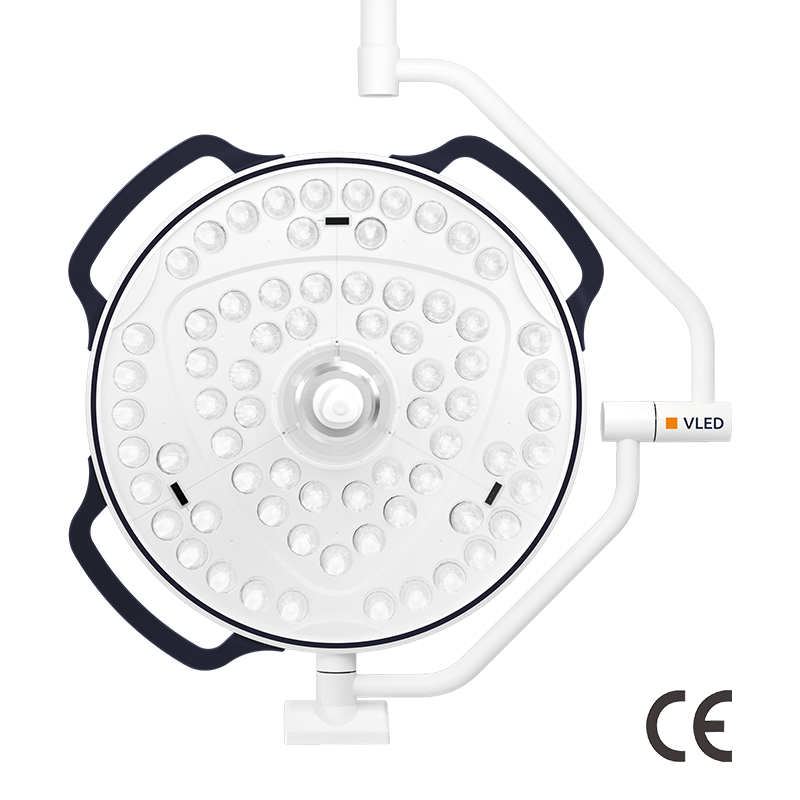
VG Medical VLED Series shadowless surgical light
How Does a Shadowless Operating Light Work?
The basic principle is to distribute light across the surgical field from multiple directions. When one part of the light path is obstructed, light arriving from other directions can continue illuminating the area. Several technologies work together to achieve this result.
1. Multiple Light Sources Reduce Strong Shadows
A surgical lamp head may contain numerous LED light sources arranged around the optical system. Their combined output creates a broad, controlled beam rather than relying on a single concentrated source.
When a surgeon's hand or an instrument blocks some of the light, other light paths may still reach the surgical field. This helps soften shadows and improves visibility compared with a lighting arrangement that relies on one narrow direction.
The number of LEDs alone does not determine shadow performance. Their arrangement, beam angles, optical characteristics, and the overall design of the lamp head are equally important.
2. Optical Lenses Shape and Overlap the Light Field
Optical lenses direct light toward the target area and help create a controlled light field. Depending on the design, overlapping beams can improve illumination uniformity and reduce abrupt changes in brightness across the surgical site.
Light field diameter and illumination depth are useful specifications to compare. The light field should be suitable for the intended procedures, while sufficient depth helps maintain useful illumination at different working distances. Buyers should review the manufacturer's test conditions instead of comparing isolated maximum values.
3. Intelligent Shadow Management Adjusts Light Output
Some advanced LED surgical lights incorporate intelligent shadow management. Depending on the system, sensors and control electronics can monitor changing conditions and adjust the contribution of different LED groups to help maintain illumination when part of the light is blocked.
VG Medical's VLED Series includes an intelligent shadow management feature. Its product information also describes a multi-zone lighting design and optical arrangements intended to improve light field control. These features can be relevant to hospitals looking for more consistent illumination during changing surgical conditions.
Not every shadowless operating light uses the same control technology. When comparing models, ask the manufacturer how shadow compensation works, whether adjustments are automatic, and which performance measurements are available.
4. Color Consistency Supports Tissue Recognition
Brightness is only one part of surgical lighting. Clinicians also need to see tissue colors accurately. The color rendering index (CRI) indicates how faithfully a light source renders colors compared with a reference source under specified conditions.
Some LED designs use mixed-color light sources to adjust color temperature. The optical system needs to manage these sources carefully so partial obstruction does not create unwanted color differences across the field. VG Medical states that its VLED Series uses dual-color LED mixing within the lens to support adjustable color temperature and consistent correlated color temperature along the light path.
For procurement purposes, check CRI, relevant individual color-rendering values where provided, adjustable color temperature, and the manufacturer's supporting test data.
What Makes an LED Shadowless Light Different?
An LED shadowless light uses light-emitting diodes as its light source. LED technology is widely used in modern surgical lighting because it can offer controllable output, long rated service life, and flexible optical design.
Compared with older halogen systems, LED surgical lights generally consume less power for comparable lighting tasks and produce less radiant heat toward the surgical field. Actual energy use, heat performance, and service life vary by model and operating conditions, so buyers should confirm the published specifications.
Common features to evaluate include:
- Adjustable illuminance: Allows the team to select a suitable brightness level for the procedure.
- Color temperature control: Provides options for the preferred appearance of the illuminated field where supported.
- High color rendering: Helps clinicians distinguish colors within the surgical field.
- Light field adjustment: Allows the illuminated area to be adapted to the target field.
- Long rated LED life: Can reduce the frequency of light-source replacement compared with some traditional technologies.
- Ergonomic positioning: Supports adjustment of the lamp head while helping the team maintain a suitable working arrangement.
LED technology alone does not guarantee shadowless performance. The complete optical design and measured performance should determine whether a model meets the requirements of the intended clinical environment.
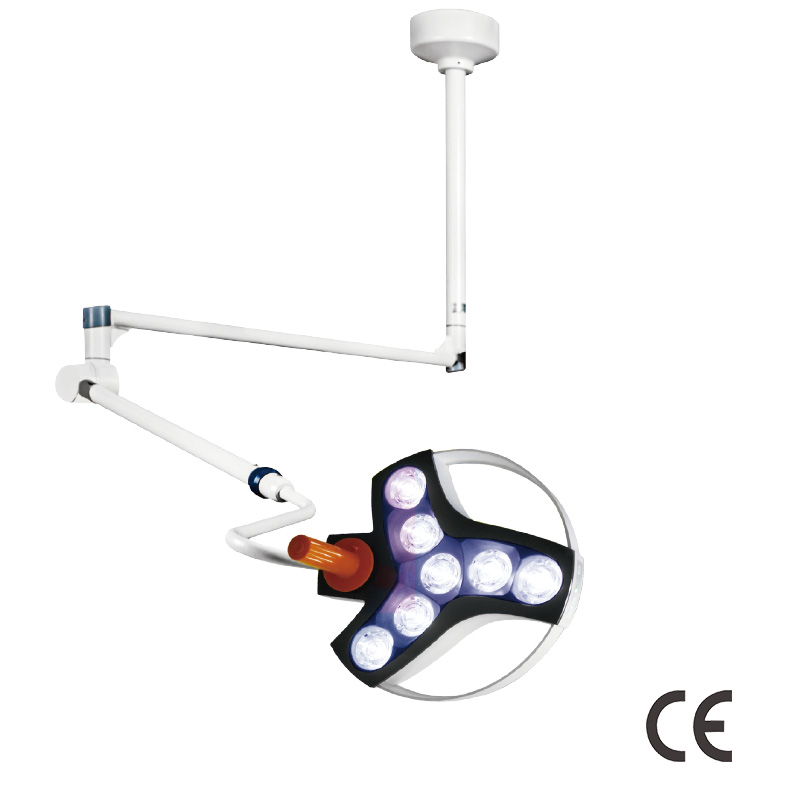
CLED 328/388 LED lighting for examination and treatment environments
Key Specifications to Check Before Buying
When sourcing a shadowless surgical light for a hospital project, buyers should evaluate the technical specifications against the procedures performed, room configuration, applicable standards, and maintenance requirements.
| Specification | Why It Matters |
|---|---|
| Illuminance | Shows the available light output at the specified measurement distance. |
| Illumination depth | Indicates how well useful illumination is maintained at different depths. |
| Light field diameter | Helps determine whether the illuminated area suits the surgical field. |
| Color rendering index | Indicates how faithfully the light renders colors. |
| Color temperature | Describes the color appearance of the light and whether adjustment is available. |
| Shadow management | Helps assess illumination when staff or instruments obstruct the light path. |
| Mounting and movement | Determines compatibility with ceiling height, room layout, and clinical workflow. |
| Compliance and service | Covers applicable regulatory documentation, installation, warranty, and spare parts. |
As one product example, VG Medical's VLED Series lists an illuminance range of 40,000–160,000 lux at 1 m, a CRI of Ra 97, an adjustable light field diameter of 180–330 mm, and model-dependent color temperature options. These are manufacturer-published specifications for the listed series; buyers should verify the exact model and configuration before placing an order.
Where Are Shadowless Surgical Lights Used?
Shadowless operating lights are primarily used in operating rooms where clinicians need controlled illumination of the surgical field. The appropriate configuration depends on the procedures, room size, mounting conditions, and other installed equipment.
- General operating rooms: Provide focused illumination for a broad range of surgical procedures.
- Specialty operating rooms: Require selection based on procedure-specific visibility and positioning needs.
- Day surgery and treatment rooms: May use compact or lower-output models where suitable for the intended clinical tasks.
- Teaching and integrated OR environments: May require compatibility with cameras, monitors, or surgical video systems.
For smaller treatment environments, a compact LED model may be more practical than a large ceiling-mounted system. For a major operating room, buyers may need a double-head configuration, camera integration, or coordinated installation with medical pendants and other ceiling equipment. Selection should follow the clinical requirements rather than the product name alone.
How to Choose a Reliable Shadowless Surgical Light Manufacturer
Product specifications are important, but hospitals and medical equipment distributors should also evaluate the manufacturer's quality system, documentation, production controls, installation support, and after-sales service.
Before confirming an order, request the technical datasheet, applicable certificates, installation drawings, warranty conditions, and maintenance guidance. For ceiling-mounted equipment, verify ceiling load capacity, mounting height, suspension-arm clearance, and possible interference with medical pendants or monitors.
VG Medical has focused on operating room and ICU equipment since 2003. Its product portfolio includes surgical lights, operating tables, medical pendants, and digital integrated OR solutions. Buyers can learn more about VG Medical's experience and review the available surgical light range for hospital projects and distributor requirements.
When requesting a quotation, provide the intended application, preferred mounting type, required illuminance, number of lamp heads, destination market, and estimated quantity. This information helps the supplier recommend a configuration that matches the project's technical and operational needs.
Frequently Asked Questions
1. Why is a surgical light called a shadowless light?
It is designed to reduce the intensity of shadows in the surgical field by distributing light from multiple directions. The term does not mean that every shadow is eliminated under all conditions.
2. How does a shadowless surgical light reduce shadows?
Multiple light sources and carefully designed optics direct overlapping beams toward the surgical field. When one light path is blocked, other paths can continue providing illumination. Some advanced models also use intelligent shadow management.
3. Is an LED shadowless light better than a halogen surgical light?
LED models generally offer long rated light-source life, controllable output, and lower power consumption for comparable lighting tasks. The best choice depends on measured performance, budget, maintenance, and the requirements of the operating room.
4. What illuminance should a shadowless operating light provide?
The required illuminance depends on the intended clinical use and applicable standards. Buyers should compare the manufacturer's specified range and test conditions against their facility's requirements rather than relying on one maximum value.
5. What is the role of color rendering in surgical lighting?
Color rendering affects how accurately tissue colors appear under the light. A suitable CRI and consistent color performance can support visual assessment during surgery, so both should be included in the technical evaluation.
6. What should hospitals check before installing a ceiling-mounted surgical light?
Hospitals should verify the ceiling structure, load capacity, mounting height, electrical requirements, arm movement, and clearance from other equipment. Installation and commissioning should follow the manufacturer's instructions and applicable local requirements.
7. Does VG Medical offer LED shadowless surgical lights?
Yes. VG Medical lists LED surgical lighting products including the VLED Series, which features adjustable lighting parameters and intelligent shadow management. Buyers should confirm the exact model, configuration, and technical documentation with the company.
Find the Right Shadowless Surgical Light for Your Project
A good shadowless surgical light combines controlled illumination, effective shadow reduction, suitable color rendering, and practical positioning. For hospital procurement teams, the best model is the one that meets the intended clinical requirements and fits the operating room's installation conditions.
Compare the optical performance, mounting options, regulatory documentation, and long-term service support before making a final decision. VG Medical's surgical lighting range offers options for different clinical environments, with product configurations that can be discussed according to the needs of hospitals, distributors, and operating room contractors.