{ 3D Atomized Eye Mask Nebulizer }

  • How deep can a medical vein finder see?

    1. Main detection depth


    General depth: Most devices can detect veins 0.2 to 1.0cm beneath the skin, but the actual effective imaging range is usually concentrated on the shallower veins under the skin (0.2 to 1.0 cm).

    Best effect: For clearly visible superficial veins (such as the back of the hand and forearm), the imaging effect is the best.


    2. Key influencing factors

    Skin condition

    Skin color, fat thickness, edema or scar tissue can reduce penetration.

    Patients with obesity or edema may have limited depth.

    Equipment performance

    The wavelength of the light source (usually near-infrared, approximately 750 to 980 nm) affects the tissue penetration.

    The imaging algorithm and sensor sensitivity determine the ability to restore details.

    Venous characteristics:

    There are significant differences in vein diameter, blood filling degree and depth.

    Deep veins (such as the femoral vein in obese patients) may not be clearly displayed.


    3. Technical limitations

    Non-penetrating deep blood vessels: Unable to detect arteries or visceral blood vessels, mainly used for superficial vein finder localization (such as infusion and blood drawing).

    Auxiliary rather than substitute: It cannot completely replace deep imaging technologies such as ultrasound.


    4. Common application scenarios

    Patients with difficulty in venipuncture (children, the elderly, obese individuals).

    Patients with arteriosclerosis or hidden veins caused by long-term intravenous infusion or chemotherapy.

    Assist nurses or doctors in increasing the success rate of puncture.


    Interested in becoming a distributor? Contact us for wholesale pricing.

    Also welcome to contact us, we are ZD Medical Inc.
    Tel : +86-187 9586 9515
    Email : sales@zd-med.com
    Whatsapp/Mobile : +86-187 9586 9515
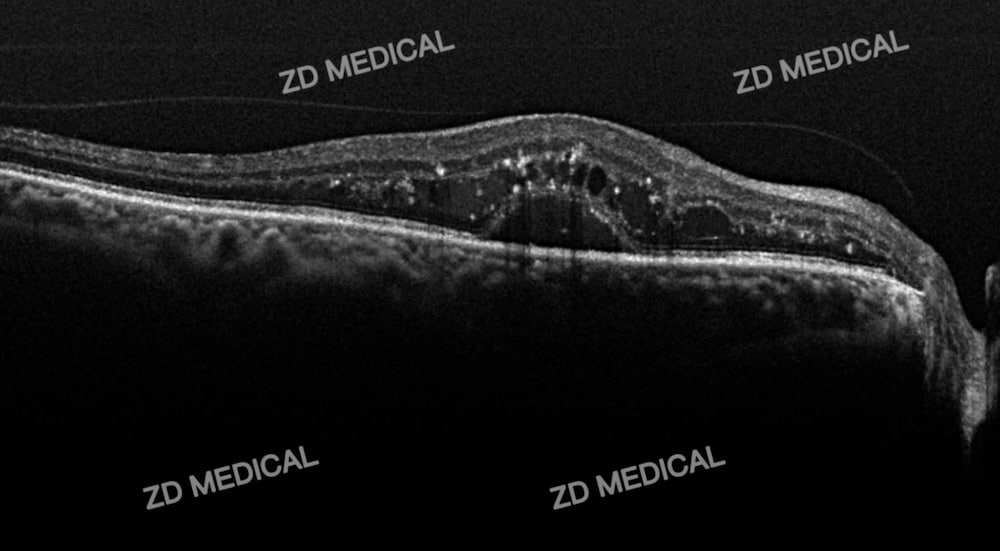

  • Early detection of diabetic retinopathy using OCT imaging

    1) Traditional Screening Methods and Their Limitations


    Traditionally, the screening and staging of DR Mainly relied on color fundus photography to observe two-dimensional surface lesions such as retinal microaneurysms, hemorrhage and exudation. However, this method has limitations:

    Strong subjectivity: Relying on the doctor’s experience.

    Inability to observe deep structures: It is impossible to quantitatively assess the early structural damage of the retina, especially the early morphology of diabetic macular edema (DME).


    2) The core role of OCT in the early detection of DR

    OCT is a non-contact and non-invasive cross-sectional imaging technique, similar to “optical biopsy”, which can provide micrometer-resolution images of each layer of the retina. Its application in early DR Is mainly reflected in the following aspects:

    1. Detect subclinical diabetic macular edema

    Key finding: OCT can detect before clinically visible retinal thickening or hard exudation (visible in traditional fundus photography) occurs in patients:

    A slight thickening of the inner layer of the retina.

    Early and local damage to the outer structures of the retina (such as the ellipsoid zone and the external membrane).

    Tiny cystoid hyporeflex cavities (early cystoid edema).

    Significance: This enables doctors to initiate or intensify treatment (such as optimizing blood sugar and blood pressure control, or considering early anti-VEGF therapy) before vision decline occurs, thereby protecting central vision.


    2. Quantify the thinning of the retinal nerve fiber layer and ganglion cell layer

    Key finding: DR Is not only a vascular disease but also a neurodegenerative disorder. OCT can precisely measure:
    Retinal nerve fiber layer (RNFL) thickness: RNFL thinning can occur in patients with early-stage DR, which is related to the course of diabetes and blood glucose control.
    Ganglion cell-inner plexiform layer (GC-IPL) thickness: This is a more sensitive indicator. Its thinning may occur earlier than microvascular lesions, suggesting early neuronal damage related to diabetes.

    Significance: It provides objective biomarkers for the early neurodegeneration of DR, which is helpful for a comprehensive assessment of the condition.


    3. Identify subtle vascular abnormalities and ischemia
    OCT angiography (OCTA)

    : This is a revolutionary extension of OCT technology. Three-dimensional retinal and choroidal vascular maps can be generated without the injection of contrast agents.
    Early detection: It can clearly show the expansion and irregular shape of the non-perfusion area (ischemic area), the avascular area of the fovea centrae in the macular region (FAZ), and the reduced density of the retinal capillary network. These changes may occur in the early stage of DR (even in the non-proliferative phase).

    Advantages: Non-invasive, rapid and repeatable, it avoids the allergic risks associated with fluorescence angiography and is highly suitable for follow-up and monitoring.


    4. Monitor the changes at the vitreoretinal interface

    Key finding: Early DR May lead to abnormal adhesion or partial detachment of the posterior vitreous cortex (PVD), which is a risk factor for future traction, vascular rupture or macular edema. OCT can clearly display these subtle interface changes.

    3) Summary of OCT Technology Advantages
    High resolution and objective quantification: Provide objective and quantifiable data (thickness, volume, density), reducing subjective errors.
    Non-invasive and fast: Highly accepted by patients, suitable for routine screening and frequent follow-up.
    Three-dimensional and hierarchical analysis: It can precisely locate the level of the lesion in the retina.
    Function Expansion (OCTA) : It has achieved non-invasive capillary-level blood flow imaging, significantly enhancing the ability to detect early ischemia and vascular abnormalities.

    4) Application Paths in Clinical Practice
    Screening stage: For all patients with type 2 diabetes and those with a longer course of type 1 diabetes, in addition to traditional fundus photography, OCT (especially macular OCT) should be included as part of baseline examination and annual screening when conditions permit.
    Diagnosis and staging: When mild non-proliferative DR (NPDR) is detected by fundus photography, OCT can assess whether there is subclinical macular edema or thinning of the nerve layer, helping to conduct more precise risk stratification.
    Treatment decision-making and follow-up: For patients who have developed DME or require panretinal photocoagulation, OCT is the gold standard tool for guiding treatment (anti-VEGF, laser) and evaluating efficacy. OCTA is used to assess the degree of ischemia.


    Interested in becoming a distributor? Contact us for wholesale pricing.

    Also welcome to contact us, we are ZD Medical Inc.
    Tel : +86-187 9586 9515
    Email : sales@zd-med.com
    Whatsapp/Mobile : +86-187 9586 9515
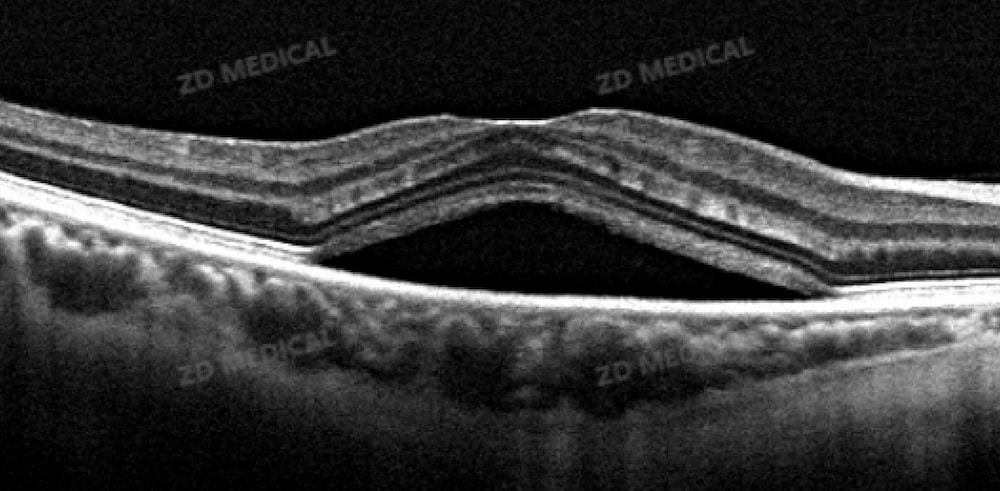

  • How can we avoid patients' tension when using a vein finder device?

    1) Communication Script: Transforming “Unknown” into “Knowable”


    The patient’s tension mainly stems from the fear of unknown equipment and processes. Your words are the first line of defense against fear.

    1. Popularize the introduction of the equipment (avoid using medical terms) :

    Don’t say: “We are now using an ultrasound venous imager to find your blood vessels.”

    It can be said: “Let’s use this’ vascular fluoroscopy instrument ‘to take a look and see which of your blood vessels is the most obedient. We’ll choose that one.” Or “This is a ‘vascular navigation’ that can help us see more clearly and make the puncture go more smoothly.”

    Principle: Comparing high-tech devices to common concepts in life (such as perspective and navigation) can instantly bring people closer and eliminate the sense of mystery.

    2. Emphasize the benefits to patients (empathy and comfort) :

    Combining the pain point: “Your blood vessels instrument are relatively thin and deep. Let’s take a look at this. It can save you one injection and succeed in one attempt.” This sentence directly hits the patient’s most core fear.

    Expressing concern: “This instrument can help us find the best blood vessels and make your process a bit easier.”

    3. Real-time communication during the operation process (involve them) :

    Invitation to Watch: After scanning a clear blood vessel, turn the screen towards the patient: “Look, this is your blood vessel, displayed very clearly.” We’ll go in from here later.”

    Visual explanation: Pointing at the screen, he said, “Look, this one is thicker and straighter. The one beside it is thinner and has forks. We won’t choose it.” Doing so makes patients feel that everything is under control and a clear plan, rather than being operated blindly.

    Give a sense of control: Before wiping the coupling agent, you can say: “This gel is a bit cold. Just a reminder for you.” Let the patient have an expectation for the next step.


    2) Operational Behavior: Build trust with professionalism and thoughtfulness

    Your behavior conveys a sense of security more than your words.

    1. Stay confident and composed

    You yourself should demonstrate your proficiency and confidence in the equipment. Your composure will directly influence the patients. Even if you are a beginner, you should practice in advance to ensure that the operation process is smooth.

    2. Pay attention to patient comfort

    Position: Help patients adjust to the most comfortable posture to ensure that they do not become more tense due to an uncomfortable position during the operation.

    Keep warm: If the environment is cold, make sure to cover the patient. Coldness can cause blood vessels to constrict and increase tension.

    Preheating the coupling agent: If conditions permit, preheat the coupling agent in the palm of your hand before use to avoid the cold touch startling the patient.

    3. Gentle and precise operation

    Gentle pressing: When the probe touches the skin, be sure to do it gently to avoid forceful pressing that may cause discomfort and pressure to the patient.

    Reduce unnecessary scans: Scan with a purpose. Do not aimlessly swing the probe back and forth on the patient’s arm, as this will increase their unease.


    3)Scenario-based Response Strategies

    The strategy can be fine-tuned for different types of patients:

    1. For children:

    Gamification: It is called “The mini-game of finding blood vessels” or “Blood Vessel Monster Detector”.

    Distract him: Have him look at the images on the screen or chat with him and ask what he sees.

    Encouragement and Rewards: Provide positive encouragement and praise throughout the process.

    2. For patients who are extremely anxious or have experienced failure before:

    Take the initiative to admit and guarantee: “I understand you might be a little worried. It might not have gone smoothly last time.” This time we’ve used this “good helper”, and the situation will be different. Let’s get it done together.

    Give the option (if possible) : “Do you think we are looking at the left hand or the right hand?” Even a small choice can increase a patient’s sense of control.


    Also welcome to contact us, we are ZD Medical Inc.
    Tel : +86-187 9586 9515
    Email : sales@zd-med.com
    Whatsapp/Mobile : +86-187 9586 9515
  • What are the four key points that Vein Finder must pay attention to?

    Key Point One: Imaging technology and clarity


    This is the core indicator, which directly determines the practical effect of the equipment.

    Core technologies: Currently, there are mainly two mainstream technologies, namely infrared imaging and ultrasonic imaging. Infrared light equipment is non-contact and forms images based on the differences in the absorption of near-infrared light by hemoglobin in blood vessels. Ultrasound, on the other hand, directly observes the structure of blood vessels and blood flow through sound waves.

    Image quality: Focus on the resolution, contrast and depth of the imaging. High-quality imaging devices can present clear vascular images that contrast sharply with the surrounding tissues on patients of different skin colors and body weights. Especially for deep and tiny blood vessels, whether they can be clearly displayed is the key.

    Real-time performance: The image should have no delay and be able to follow the movement of the probe in real time, which is crucial for the dynamic puncture process.


    Key Point Two: Patient adaptability and safety

    The equipment must be capable of serving a wide range of patient groups and be absolutely safe.

    Skin color adaptability: Excellent equipment should have the ability to overcome “skin color bias”, effectively imaging both fair and dark skin. Find out if the device has special calibrations or modes for different skin tones.

    Body type adaptability: For patients with obesity, edema or emaciation, whether the penetration ability and imaging effect of the equipment are stable.

    Safety level: Confirm that the light source energy of the equipment is within the absolutely safe range of non-ionizing radiation and has obtained the relevant medical device registration certification.


    Point Three: Ease of use and workflow integration

    The equipment needs to be integrated into the existing clinical process rather than adding to the burden.

    Ease of operation: Can the device be used immediately upon startup? Is the calibration process complicated? Is the interface intuitive? Ideally, nurses or doctors should be able to get started after a brief training.

    Portability and Design: Is the device Handheld Vein Finder or desktop Vein Finder ? How is the battery life? Whether it is lightweight and ergonomically designed, making it convenient to move and use between wards, emergency rooms and operating rooms.

    Sterility and disinfection: Are the parts that come into contact with patients easy to clean and disinfect? Are disposable sterile protective covers provided? This is directly related to infection control.


    Key Point Four: Functionality and Augmented Reality Experience

    Advanced functions can significantly enhance clinical value.

    AR augmented reality projection: Many modern venous imaging devices can directly project vascular images onto the patient’s skin, achieving “what you see is what you get”, allowing the operator not to switch their line of sight back and forth between the screen and the skin, greatly improving the success rate of puncture and the user experience.

    Vascular recognition mode: Is there a special mode, such as only showing arteries or veins (by identifying the direction of blood flow), which is very important for certain special treatments?

    Image and data Management: Does the device support image taking, archiving, or connection to the hospital information system? This is of certain value for case recording, teaching and remote consultation.


    Also welcome to contact us, we are ZD Medical Inc.
    Tel : +86-187 9586 9515
    Email : sales@zd-med.com
    Whatsapp/Mobile : +86-187 9586 9515

  • International Day of the Blind丨Illuminating Vision ZD Medical OCT Builds a Robust Defense for Retinal Health

    The International Day of the Blind on October 15th every year is a day that calls for attention to eye health and conveys the hope of light. When we focus on the living predicaments of the visually impaired group, a set of data should prompt more deep thought…

    The silent threat of blindness: The insidious nature of retinal diseases


    Retinal diseases such as diabetic retinopathy (DR) and age-related macular degeneration (AMD) have become the leading causes of irreversible blindness in China, and most patients have missed the best intervention opportunity by the time they show obvious symptoms. According to statistics, over 250 million people worldwide suffer from vision impairment, and nearly half of them can avoid it through early intervention. However, the limitations of traditional examination methods have caused many patients to miss the best treatment opportunity. In this race against darkness, ZD Medical  precise diagnosis and treatment solutions centered on optical coherence tomography (OCT) scanners are becoming a key force in preventing blindness.


    Zhiding OCT: Solving the Problem of Early Diagnosis with "Microscopic Insight"

    The fundus, as the core hub for visual signal transmission, often serves as an "early warning" for blindness due to its microscopic lesions. Traditional examination methods are difficult to capture the subtle changes between retinal layers. However, OCT technology has achieved a breakthrough by virtue of its unique advantage of "optical biopsy" - through the principle of weak coherent light interference, it can reconstruct two-dimensional and three-dimensional images of the fundus with millimeter-level depth and micrometer-level resolution Clearly present key lesion markers such as intraretinal effusion (IRF) and subretinal effusion (SRF).


    The core technology adopted by ZD Medical OCT can complete a full retinal scan within 3 seconds, and the image resolution is 40% higher than that of traditional equipment. Even the tiny protrusions in the retinal pigment epithelial layer of early-stage AMD patients can be accurately captured. The built-in AI+ remote film reading function of the device, along with online review by retinal disease experts, covers all ophthalmic diseases. This effectively empowers primary medical institutions, breaks through the limitations of time, space and resources, standardizes diagnostic results, reduces the occurrence of missed and misdiagnoses, and minimizes clinical risks to the greatest extent. As emphasized in the "2025 Expert Consensus on OCT in the Fundus of China", OCT's ability to identify early lesions far exceeds that of traditional color fundus photography, and the positive screening rate is significantly higher, thus buying precious time for preventing blindness.


    Technology for Good: From Diagnostic Devices to the Construction of a Blindness Prevention Ecosystem

    The mission of ZD Medical is not only to provide hardware equipment, but also to build an integrated blindness prevention system of "prevention - diagnosis - management". We have collaborated with multiple hospitals to carry out the "Grassroots Retinal Disease Screening Program", using OCT equipment to reach communities and rural areas, enabling patients in remote regions to also enjoy precise diagnostic services. Meanwhile, the remote film reading function of the software platform has broken through geographical restrictions, enabling high-quality medical resources to flow efficiently.
    Dry Eye Detector D600

    Take responsibility as the tripod: Build the line of defense of light into every inch of land

    The significance of the International Day of the Blind lies not only in caring for those who have lost their sight, but also in safeguarding the visual health that still exists. "Leading with technology and safeguarding light", the value of OCT has never been limited to precise imaging; rather, it lies in making the concept of "early detection and early intervention" for blindness prevention take root through the popularization of technology. On this International Day of the Blind, we firmly believe that when every ZD Medical OCT device starts to operate, it is blocking the darkness for a family. When every precise report is generated, it is lighting up hope for patients! The protection of light is never an accidental stroke of luck, but an answer jointly written by technology and responsibility. Zhiding Medical will continue to take technological innovation as its pen and clinical needs as its ink, and forge ahead firmly on the path of preventing blindness.


    Also welcome to contact us, we are ZD Medical Inc.
    Tel : +86-187 9586 9515
    Email : sales@zd-med.com
    Whatsapp/Mobile : +86-187 9586 9515